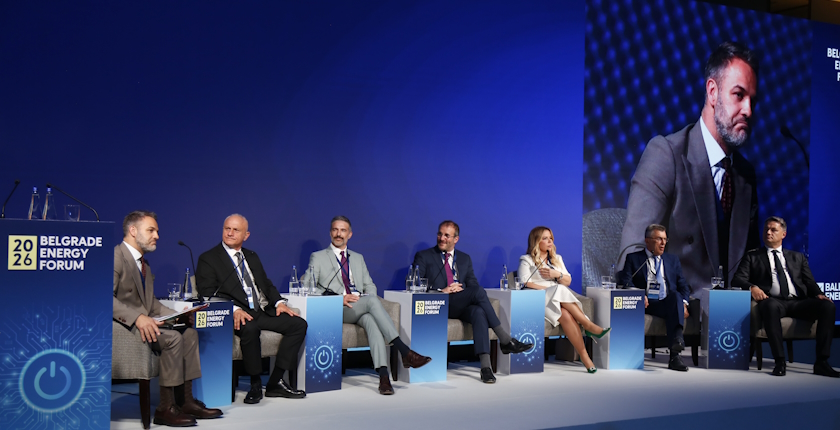
Energy companies in the Western Balkans are simultaneously facing challenges in energy security, decarbonization, and digitalization, while the key to a successful transition will be investments in the grid, battery storage systems, and new generation capacities. This was highlighted during the panel discussion “Power System Transition towards Flexible, Secure and Decarbonized Future”, which featured the Director of the Energy Institute Hrvoje Požar Dražen Jakšić.
The panel was held as part of the Belgrade Energy Forum (BEF 2026), organized on 11 and 12 May in Belgrade by the Balkan Green Energy News. Alongside the Institute’s CEO, the panel participants included Dušan Živković (CEO, EPS), Bruno Bensasson, (CEO, Akuo Energy Group), Neda Lazendić (energy expert), Milutin Đukanović, (President of the Board of Directors, EPCG) and Nemanja Laković (CEO, Coal Mine Pljevlja).
The Institute’s CEO commented that the region has recognized the need for decarbonization and for accelerating the construction of renewable energy facilities, highlighting the ambitious national targets of achieving a 40 to 50 per cent share of electricity generated from renewable energy sources by 2030. He added that this demonstrates both political commitment to the energy transition and growing investor interest, as well as an increasing number of financial mechanisms capable of supporting green projects.
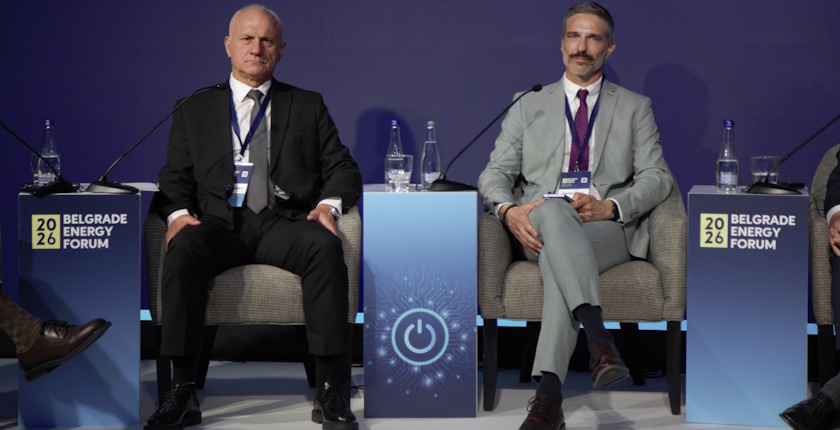
Dušan Živković (EPS) and Dražen Jakšić (EIHP)
However, he warned that the main limitations and bottlenecks for the development of renewable energy sources lie within the grid infrastructure. “This is not unique to this region. It is happening across Europe and in all countries around the world that have embarked on a stronger green transition,” Jakšić emphasized. He added that the region’s power systems were not designed to integrate large-scale renewable energy sources and that the high share of inflexible coal-based generation poses an additional challenge. According to Jakšić, the region lacks battery storage systems, flexible power plants, and fast-start gas-fired power plants needed to stabilize the system amid a high share of wind and solar generation.
Read the full report at https://balkangreenenergynews.com/energy-companies-in-western-balkans-confront-dual-mandate-keeping-supply-secure-while-accelerating-green-transition/
Photo credit: Balkan Green Energy News